Tesla bets on humanoid robots, but employees resist "teaching robots to take their jobs"
Tesla's pivot to humanoid robots has been plagued by problems such as robotic arm manufacturing, AI training and employee backlash.
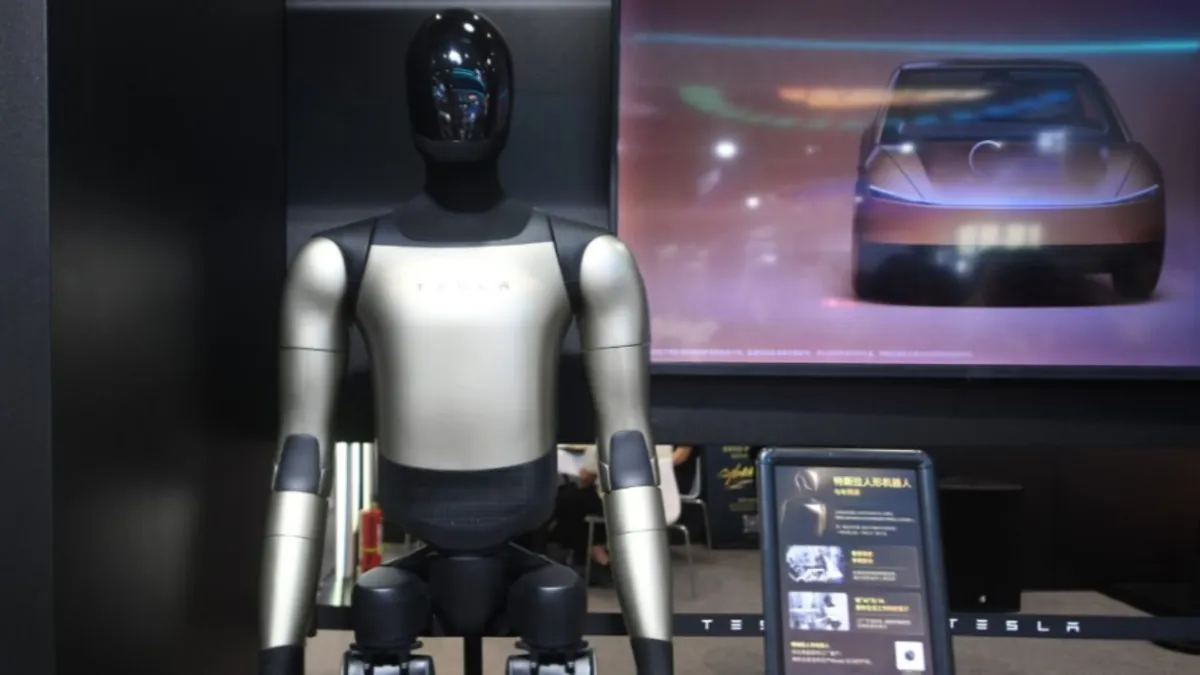
From cars to robots.
Tesla is slowly transforming from an electric car company into a robot company. Elon Musk has gambled the company's future on AI and robots. He has repeatedly stated that the Optimus humanoid robot might be "the greatest product of all time". He said that creating a humanoid robot capable of performing multiple tasks is "one of the most difficult problems to solve at present".
The latest version of Optimus V3 has proven to be very challenging in both development and manufacturing. Among humanoid robots, one of the most difficult components to manufacture is the hand. Making a robot hand with the same fine operational capabilities as a human hand is a recognized engineering challenge. Tesla's Optimus has its hands and forearms manually assembled by workers, with as many as 100 screws alone. The company originally planned to produce thousands of units per week. Now it can only reach a few hundred per week. Engineers are working hard to optimize the process.
Because the manual assembly is not perfect, the newly manufactured robots often require rework and repair. The sensing parts of the robot hand are not very sensitive. These precise parts are prone to failure during assembly. Engineers have given the robot a layer of sensing outer clothing like a glove. This outer layer wraps around the mechanical hand. If the sensor breaks, workers can replace this outer layer without disassembling the entire mechanical arm. This greatly reduces the maintenance difficulty and saves a lot of time.
AI training encounters real resistance.
To make robots work as flexibly as humans, a large amount of real data is needed to train the brain. Tesla originally planned to have workshop workers wear special clothes. These clothes could record every action they performed. The workers were very opposed to this. They were worried that the robots they trained would eventually take away their jobs. Many people began to slack off. The atmosphere on the production line became very tense.
Facing the resistance from the workers, Tesla changed its strategy. The management specially established a data collection team. These team members worked in a specialized training center. They wore special equipment and repeated various actions. They were responsible for accumulating learning materials for the robots. Massive data is making the robots increasingly intelligent.
Supply chain dependence and intense market competition.
Building robots can not do without various components. Tesla still needs to purchase a large number of core parts from China. These parts are of reliable quality and at reasonable prices. Although the US government wants to support domestic supply chains, they even issued a ban to restrict foreign-made robots. But in the short term, it is difficult to get rid of reliance on external components. Without these high-quality and affordable parts, factories can not produce enough robots.
On the track of developing humanoid robots, Tesla faces intense competition. Many well-known car manufacturers and technology companies are also making efforts. Some car manufacturers plan to introduce a large number of robots to replace human labor. Some start-up companies have already made robots enter logistics warehouses. These robots are starting to do heavy manual work. Everyone is competing to see who can make robots truly useful first. The market competition has entered a highly heated stage.
AI is not intelligent enough yet.
The current robots can only perform simple tasks in a pre-defined environment. Once they encounter complex and variable real scenarios, they tend to be clumsy. How to enable them to work safely with humans without harming them is a major challenge that engineers must address. It takes a lot of testing and tweaking. Consumers also need more patience.
Cost and practicality are the things that worry consumers and companies the most. If it costs more to build a robot than to hire people, or if it breaks down and needs to be fixed by humans, then it is no longer relevant. This industry will explode for real when robots will be able to help humans to really save money and effort and be safe and reliable.