The rupee faces pressure: Indian central bank uses intervention and interest rate hikes to deal with the energy shock
The Indian rupee has performed relatively weak among Asian currencies, being dragged down by high oil prices and rising global yields. The Indian central bank has stabilized the exchange rate through intervention and interest rate hikes, but the pressure remains.
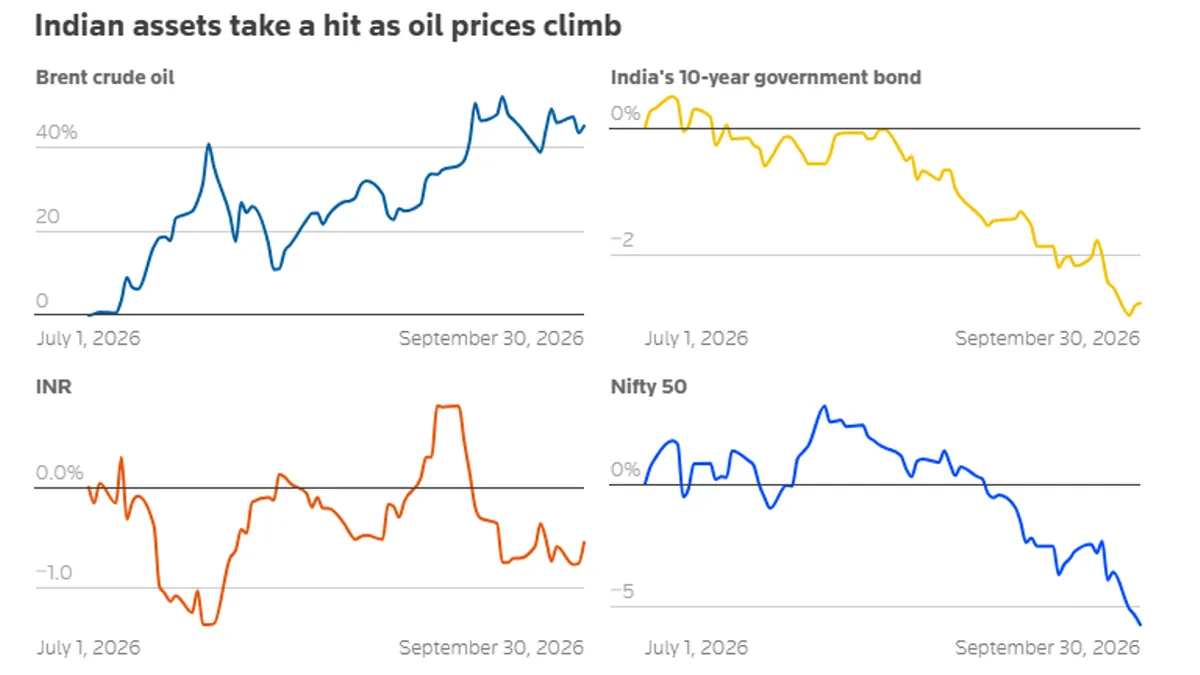
Why is the weakest currency in Asia, the rupee, remaining weak?
The rupee has recently been in a weak position among Asian currencies. Over the past 30 days, the rupee has experienced a slight decline against the US dollar. The cumulative decline in the third quarter was significant. This is due to both external and internal factors. The rise in global bond yields has made funds more inclined to flow into US dollar assets. Fluctuations in crude oil prices have also amplified the pressure on India's import costs.
India is highly dependent on crude oil imports. Over 80% of its crude oil needs to be purchased from overseas. After the escalation of the US-Iran conflict, the transportation in the Strait of Hormuz was disturbed, and the Brent crude oil price fluctuated between $70 per barrel and nearly $110. The increase in oil prices directly pushed up India's import bills. With increased import payments, the current account deficit is prone to expand. The depreciation of the rupee would, in turn, raise the import costs priced in rupees.
The central bank intervened and raised interest rates as another line of defense.
The Reserve Bank of India has been operating in the foreign exchange market. The central bank sold US dollars to cushion the depreciation of the rupee and prevent sharp fluctuations in the exchange rate. Such intervention can stabilize the exchange rate in the short term. However, it will also consume foreign exchange reserves. If external pressure persists, relying solely on intervention is difficult to maintain exchange rate stability in the long term.
In October, the Reserve Bank of India raised the repo rate by 25 basis points to 5.50%. This was the first rate hike since February 2023. The rate hike helps to curb inflation expectations. However, the rate hike comes with costs. Rising loan interest rates will increase the burden on enterprises and residents. The costs of housing loans, car loans and personal consumption loans will all increase. If the rate hike is too rapid, it may drag down domestic demand growth.
The bond market and the foreign exchange market have diverged.
The flow of foreign capital has a huge impact on the rupee. When global risk appetite declines, foreign capital may withdraw from the Indian stock market and bond market. There have been signs of foreign capital flowing out of the Indian market recently. The Reserve Bank of India has attracted some funds through special foreign exchange deposit channels. Since India introduced measures to strengthen international balance of payments in June, by September 18, a cumulative inflow of $143 billion has been attracted. These funds have enhanced the central bank's intervention capabilities.
The rupee has received phased support under the central bank's intervention. However, the yield of Indian government bonds continues to rise, and the yield of 10-year government bonds has set a record for a long period of increase. The market is still pricing in further tightening. If inflation pressure persists, bond yields may remain high. High yields will increase the financing costs for the government and enterprises.
Impact on enterprises and residents.
The depreciation of the rupee has increased the costs for import-oriented enterprises. Industries such as automobiles, electronics, and chemicals that rely on imported components and raw materials have seen their profit margins shrink. Rising oil prices will push up transportation and living costs. An increase in loan interest rates will increase the pressure on mortgage and consumer loans. If food prices also rise at the same time, the burden on household expenditures will be even heavier.