The global bond market has suffered a severe sell-off, with yields soaring to record highs over the past few decades
The global bond market has witnessed a new round of selling, with the yields on US, French, British and Japanese government bonds reaching new highs in decades.
Global bond prices have declined.
Since October, there has been a significant sell-off in major government bond markets worldwide. Bond prices have dropped, and yields have risen rapidly. The yield on the 10-year US Treasury bond once rose to 5.34%, reaching its highest level since 2002. Europe and the UK also faced pressure. The yield on the 10-year French government bond once approached 5%, and the 30-year UK government bond yield exceeded 6%. Japanese government bond yields have also risen continuously for several quarters.
The situation in the Middle East remains tense, and international oil prices remain high. Rising energy costs make it even more difficult to reduce inflationary pressure. Central banks therefore dare not easily ease their policies. The Federal Reserve, the European Central Bank, and the Bank of England are all under pressure over whether to continue raising interest rates. The expected pace of interest rate cuts has been repeatedly postponed.
AI investments are competing for funds.
The development of artificial intelligence and data centers has led to a huge demand for financing. Large technology companies raise funds by issuing bonds, competing with government bonds for investors. This competition for funds has raised the overall borrowing costs. The scale of bond issuance by enterprises has expanded, and the scale of bond issuance by the government is also increasing. The supply of bonds has risen, while savings have not increased, and thus the yield has naturally been pushed up.
The fiscal pressure in the United States is increasing.
The fiscal deficit for the 2026 fiscal year in the United States is approaching $2 trillion, and the net interest expenditure has exceeded $1 trillion. High interest rates have made refinancing of old debts more expensive. The Treasury Department needs to continuously issue new debts to maintain its operations. The supply of long-term bonds has increased, and the market's demand for term premiums is also rising. This puts greater pressure on 30-year and other long-term bonds.
France becomes the focus of the European debt market.
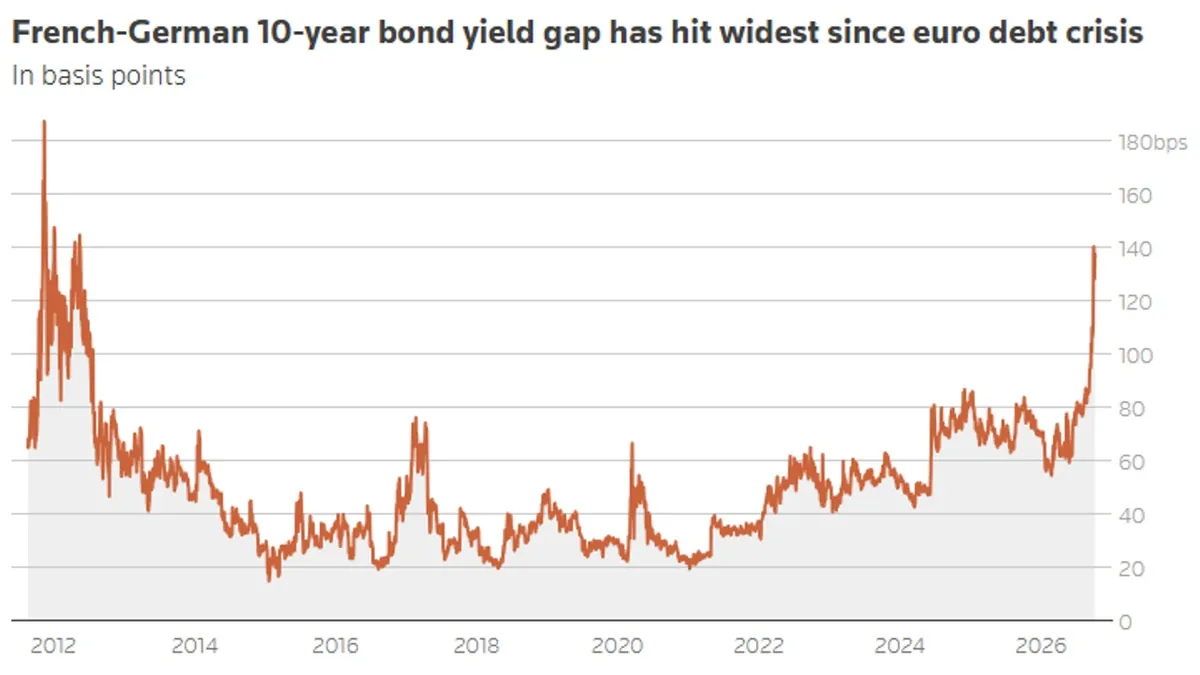
France's public debt as a proportion of GDP is approaching 120%, reaching a new post-war high. The 2027 budget proposal aims to reduce the deficit, but political divisions have made the reform more difficult. The 10-year bond yield gap between France and Germany once widened to the widest level since 2011. The market has begun to demand a higher risk premium. The European Central Bank currently has no plan to intervene.
Long-term financing costs in the UK have risen.
The yield on 30-year UK government bonds has risen above 6%, marking the first time since 1998. High interest rates have directly increased the government's interest expenses. The new budget will be announced on October 28th. The market is watching to see if the fiscal discipline can be maintained. If investors believe the government's fiscal plan is credible, the yield may fall. Otherwise, selling pressure may continue.
The stock market has maintained its resilience for the time being.
The rise in bond yields did not immediately dampen the stock market. The US economic data still indicate a resilient growth, and corporate earnings have supported stock valuations. However, high interest rates will gradually be passed on to mortgages, corporate loans, and government spending. If borrowing costs continue to rise, consumption and investment may be negatively affected. The current stability of the stock market does not mean that risks have disappeared.
The US inflation data, the bond issuance plan of the Treasury Department, and the policy signals of the Federal Reserve are highly watched. In Europe, the budget negotiations in France and the UK fiscal budget proposals will affect the sentiment of the bond market. Higher yields bring new investment opportunities, but they also mean increased volatility.