Meta attaches AI assistant to keychain
Meta has rolled out an AI app called Muse. Meta's stock price is $709 and market cap is $1.8 trillion. Zuckerberg bets on wearable AI devices.
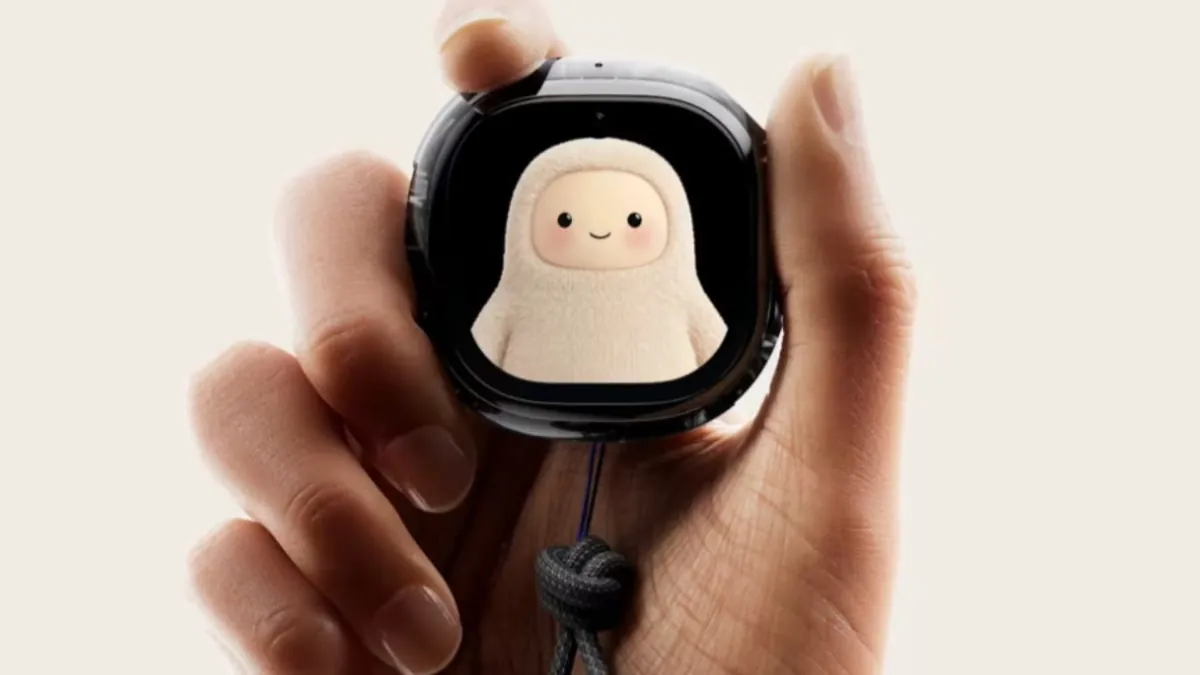
Personal AI Assistant - Muse
Meta revealed a very innovative hardware product at the latest technology conference. The device, called the Muse Charm, is small and looks like a normal keychain pendant. Users can simply attach it to their keychain and carry it with them at any time. The surface of the device is equipped with a miniature screen that can clearly display the virtual image of the AI assistant. It is equipped with a sensitive fingerprint sensor, and users can wake up the device by simply pressing it. This ingenious design enables people without wearing smart glasses to have the most convenient way to communicate with the AI in real-time through voice.
In addition to the innovative hardware, Meta also vigorously promoted its named Muse application. After its launch, this application quickly became popular and ranked high in the download numbers of various mobile application stores. It provides users with multiple autonomous robot assistants. These assistants are very intelligent and can help people handle various tedious daily tasks.
Intelligent Glasses Combined with Muse
In the field of wearable devices, Meta has also brought a new surprise. Previously, smart glasses with cameras had caused privacy concerns and been criticized by some as infringing on others' privacy. To address these concerns, Meta has launched a new version without cameras. Users can only interact with this pair of glasses through voice. The company has also released various new frame designs and a more affordable series.
The AI assistant Muse will be fully integrated into these smart glasses. When users wear the glasses for video calls, the system will generate highly realistic digital images to replace real people on screen. This technology is based on Meta's years of research and development in holographic projection technology. Since the glasses themselves can not capture the wearer's real face, this digital double not only protects the user's privacy but also makes virtual communication more vivid and interesting.
Commercialization and Strong Stock Price Recovery
Over the past two years, Meta has invested hundreds of billions of dollars in the field of artificial intelligence. The huge costs of research and development as well as infrastructure construction led to a large decline in the company's stock price. However, with the successful launch of the Muse series of products, market confidence was greatly boosted. Since the product was released in early September, Meta's market value has rebounded, increasing by several hundred billion dollars. The Muse will create actual value for users, and the company has decided to offer a free basic version of Muse to attract a wider user base.
The Security Concerns behind Data Fusion
Privacy and security are the biggest problems that Meta needs to deal with. Meta's Muse AI tool can only offer users services tailored to their needs if it gains access to their personal data. This includes emails, financial information, calendar plans and other private records. To create a personalized experience, the AI must collect and combine all these different types of user data, which is known as data fusion.
But the AI proxy technology that makes Muse work is not fully baked yet. It can make bad decisions, and in some cases it can act outside of the commands that users expect. Real safety concerns are already appearing. Meta had to issue software fixes for a security vulnerability. This flaw could let hackers take control of other people's Muse AI proxies remotely.
Amazon has taken clear action to reduce risks. It stopped Meta's AI proxies from connecting to its shopping website. The company worries these third-party AI bots may find and take advantage of weak points in Amazon's system. Users need to share their private information to enjoy the handy features brought by AI tools.
At the same time, the underlying technology remains unstable and carries hidden dangers. It is hard for people to fully trust this new product. Building user trust turns out to be a bigger challenge than solving technical problems for Meta. And even if the engineers fix the code, many users will still be reluctant to let AI systems see so much of their sensitive personal data.