Local AI battle has begun - Microsoft challenges Apple
Microsoft introduces local AI and security isolation technologies, collaborating with Nvidia to launch a high-performance PC challenge against Apple, but the high hardware costs pose an obstacle to its widespread adoption.
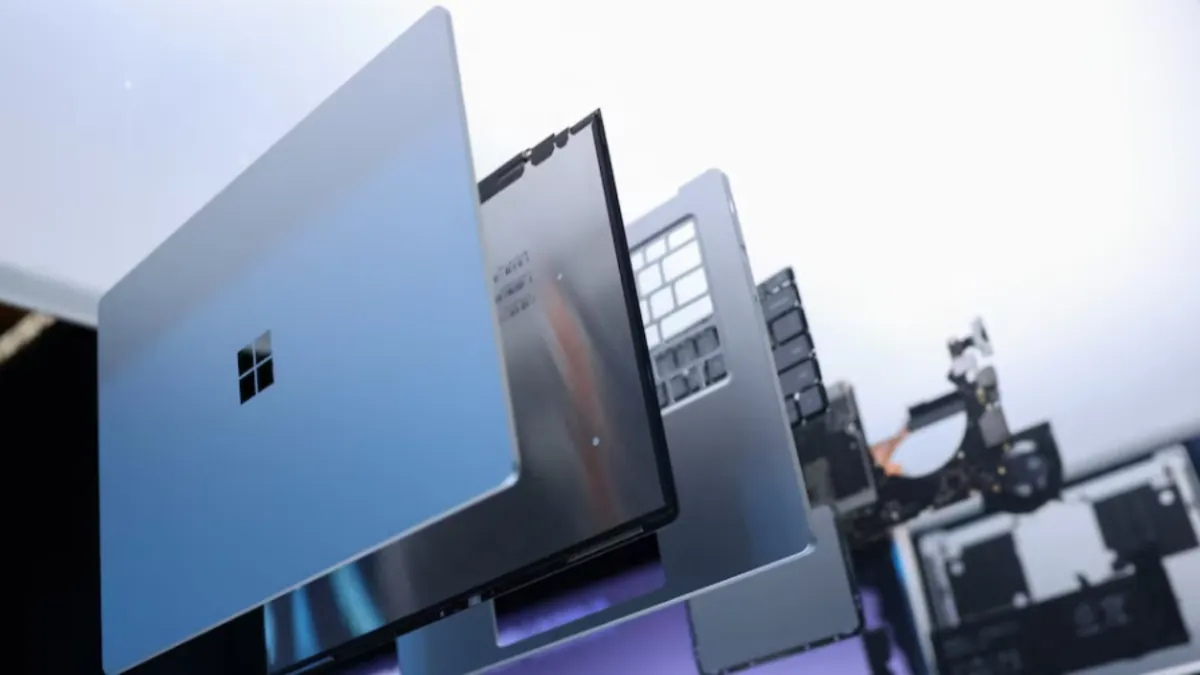
Local AI arrives.
Microsoft has recently focused its attention on everyone's personal computers. It has released an AI programming model that can run directly on the local computer. In the past, many complex AI tasks required data to be transmitted to distant cloud data centers for processing. Now, Microsoft wants to turn the Windows system into a super workstation. Whether it's writing code or handling complex business projects, the computer can handle them all by itself.
Programmers can have the AI help check code errors on the local computer. This change allows data to not be connected to the internet and processing speed becomes faster. User privacy is greatly protected. This change challenges Apple's strategy. Apple is also striving to integrate AI more deeply into personal devices. Microsoft is attempting to seize those users who pursue efficiency and privacy with a brand-new local AI experience.
Rules for security locks and AI agents.
The cloud and the local system are beginning to work together in a cooperative manner. Simple tasks are handled locally, while complex tasks are handed over to the cloud. This hybrid model is becoming a new industry trend. Enterprise users show great interest in this. AI is becoming increasingly intelligent and can even decide on its own to search for files or perform operations on the computer. This brings huge security risks. Some recent hacking incidents have made people worried about the autonomous behavior of AI.
To prevent AI assistants from randomly accessing data without permission, Microsoft has launched a brand-new security isolation technology. It can only operate within the specified range and must not exceed the boundaries. The IT department of enterprises can formulate strict rules. Any attempt to break through the restrictions will be intercepted. This technology has received enthusiastic responses from tech giants. The head of Nvidia stated that without this security isolation technology, AI assistants can not be safely launched on computers.
Apple is also taking similar measures to limit the complete access rights of AI to the computer hard drive. Everyone is striving to find a balance point. While allowing AI to work freely, it is also necessary to ensure that users' private data is absolutely safe. Without rules, AI can not truly be implemented on personal computers. Security has become the prerequisite for all technological innovations. Enterprises can confidently hand over their core business to AI processing.
Hardware competition and high barriers.
To run powerful AI models locally smoothly, the computer's configuration must be extremely powerful. Microsoft has launched a high-performance laptop equipped with the latest dedicated computing chips. The memory and storage space of this laptop have reached astonishing levels. To support such massive computing power, the shortage of memory chips has led to a sharp increase in hardware costs. The starting price of this new laptop is close to $2,600. The high-end version even approaches $6,000. The price of the AI desktop computer launched by Nvidia has also soared.
These expensive devices deter ordinary consumers. The upgrade speed of hardware far exceeds the adoption speed of software. Manufacturers are frantically adding components in an attempt to seize the high-end market. Analysts point out that two years ago, everyone was expecting local AI, and at that time, the hardware was barely sufficient. Now the software is finally ready, but the hardware price is outrageously high. For ordinary office workers, they still need to wait for further reduction in hardware costs before they can experience this local AI that does not require an internet connection.
Future office methods.
Microsoft is not only selling hardware and systems. It has announced that AI personal assistants launched by other tech giants will be available as native applications on Windows computers. These applications will seamlessly integrate with Microsoft's latest security tools.
At the same time, some AI models from overseas have also announced that they can run locally on high-memory Windows computers. Nvidia is also taking this opportunity to attempt to enter the personal computer market dominated by traditional chip giants. Its dedicated chips have enabled Windows computers to have local computing power comparable to that of supercomputers.