Europe agrees to release diesel stocks, and oil prices fall
Europe has agreed to release its diesel reserves, and oil prices have dropped. Brent crude is at $102 and WTI is at $91. The supply of refined oil products has become the focus.
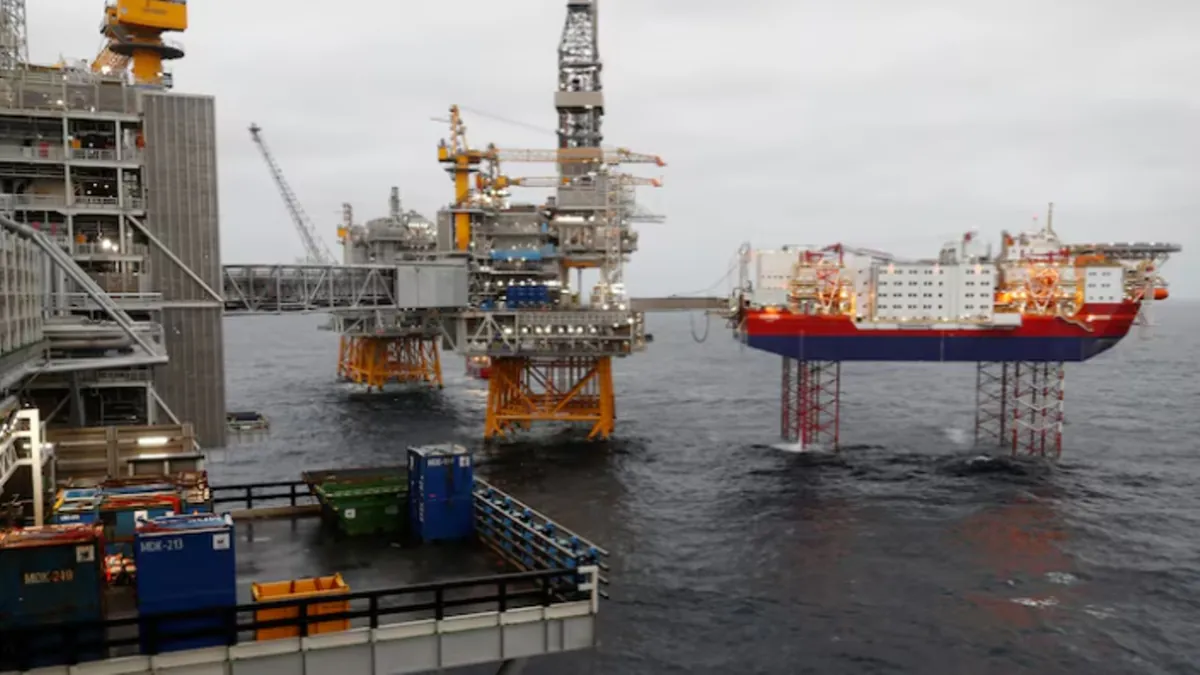
Europe's concession led to a drop in oil prices.
European leaders agreed to release diesel reserves to lower oil prices and reduce fuel imports from the United States. Crude oil futures closed lower. Brent crude closed down 6 cents, at $102.25 per barrel, a 0.06% decline. WTI crude fell more significantly, dropping $1.76 to $91.11 per barrel, a 1.90% decline. Over the entire week, Brent crude rose 0.11%, while WTI fell 1.6%.
This round of European concessions was made under pressure from the US. Trump wrote on social media, Europe has just agreed to release a large amount of stockpiled diesel. Before that, Trump had said he was considering banning US diesel exports. Pressuring to release oil while using the ban as a bargaining chip. Analysts said that if the United States really imposed an export ban on diesel, Europe would be one of the regions most affected. After the conflicts in Ukraine and the Middle East began, Europe has highly relied on the fuel supply from the United States. Once the ban is implemented, oil prices will surely soar.
Europe could only agree to release diesel and oil reserves. The specific operation was based on France's proposal. European countries would release 50 million barrels of diesel, and the member countries of the International Energy Agency would release another 50 million barrels of crude oil. And some of the diesel would be released within 20 days. French President Macron also specially convened a meeting of G7 leaders, but it is not clear yet whether the G7 accepted this proposal in its entirety.
There is still a shortage of refined oil products.
Why did Europe specifically allow the sale of diesel? Because the current market pressure is no longer related to the crude oil itself. Analysts point out that oil exports from the Middle East are recovering, and the supply of crude oil is no longer so tight. The real shortage in the market is diesel and gasoline, which are refined oil products. Analysts say that the refining capacity in the Middle East and Russia has declined, resulting in limited production of refined oil products such as diesel. Diesel has a significantly stronger resilience than crude oil. The futures market has keenly detected this structural shortage.
Oil prices are not solely falling in a single direction. China has suspended the export of refined oil products in October to maintain domestic inventories. The US is considering sending a third aircraft carrier group to the Middle East with up to 10,000 troops as Trump mulls resuming air strikes on Iran. Shrinking supply and the re-emergence of geopolitical risks are underpinning oil prices.
In addition, Ukrainian President Zelensky said that in the past 24 hours, the Ukrainian army attacked the oil facilities in Russia's Samara and Volgograd. Once the refining facilities are bombed, the supply of refined oil products will decrease. The November midterm elections in the United States are approaching, and the level of fuel prices affects voters' wallets. The Trump administration is facing political pressure to lower oil prices. Oil prices fluctuate in response to policy changes.
The current market stability supports the expectations for future prices.
Traders are assessing the policy direction. If the US government takes more intervention measures, oil prices may further decline. Futures prices have dropped, but the performance of the physical market remains very strong. Although the crude oil outflow from the Middle East has improved, global inventories are still being consumed.
The prices of near-term contracts are higher than those of far-term contracts. The market is very concerned about the current shortage of spot supply. Traders are reluctant to sell short-dated contracts at low prices, as they could be at risk of default at any moment. The downside on oil prices is limited because of the current situation where spot prices are stronger than far term prices. Many institutions have raised their future oil price forecasts and are optimistic about prices next year.