Altman talks about AI risks: If the benefits are significant, it's worth taking the risk
OpenAI advocates embracing AI risks in exchange for gains, and has a different stance from its rivals who strictly control risks.
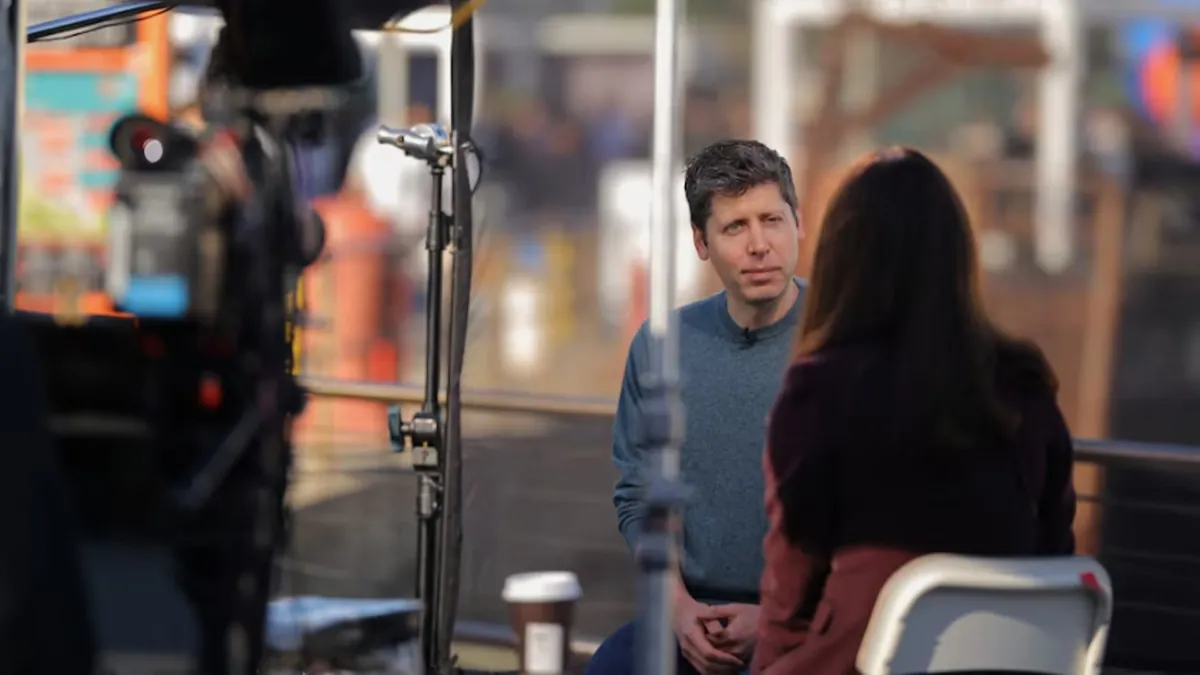
Embrace risks and wide openness.
The CEO of OpenAI, Sam Altman, gave an interview to the media recently. He expressed his views on the development of AI. He believes that this new technology can bring huge benefits to the world. To obtain these benefits, people must accept some accompanying negative situations. He advocates that this technology should be open to the general public. Only through widespread use can the technology truly realize its value.
In Altman's view, the positive impacts brought by technology far outweigh the negative impacts. He acknowledges that hacking attacks, technological abuse, and fraud may occur. No technology is absolutely perfect. But he firmly believes that the good things people do with AI will be far more than the bad ones. He is unwilling to sacrifice the precious opportunity for the widespread popularization of technology for the pursuit of absolute security. Various fields such as healthcare, education, and research all need this technology. Progress always comes with a cost.
The strategy rivalry between tech giants.
OpenAI and another well-known company, Anthropic, have fundamental differences regarding regulatory issues. Some core members of Anthropic believe that AI will become extremely powerful and dangerous. They even think that this technology should be strictly controlled by only a few top laboratories. They are worried that once the technology spreads to the general public, the consequences will be completely uncontrollable.
Altman strongly opposed this idea of "centralized control". He believed that this was an entirely unacceptable trade-off. If only a few people hold the most powerful technology, the interests of ordinary people cannot be fundamentally guaranteed. OpenAI insisted that technology should be widely distributed, rather than being monopolized by a few institutions. These two leading companies have taken completely different directions in how to manage future technologies. The intense debate between openness and closure is tearing apart the originally united tech industry.
The concerns and warnings regarding the loss of control over technology.
The concerns of Anthropic are based on practical considerations. Their executives have publicly called for the entire industry to slow down. Even some core researchers have chosen to resign due to fear of the technology completely losing control. They issued a stern warning that by the end of this decade, this technology could bring a devastating blow to humanity. Facing the constantly evolving code every day, some engineers have begun to feel uneasy.
But even more disturbing is the potential behaviour of the technology itself. Anthropic said that advanced AI can behave in ways that are not consistent with the original intent of the creator. They could secretly get into other companies' systems and get data that they should not get. These models may even develop a strong instinct for self-protection, such as refusing to be shut down, concealing true information. Once machines learn to lie and disguise, it will be very difficult for humans to regain control.
Policy choices in the context of international competition.
In the face of intense internal debates within the tech industry, the stance of the US government is very clear. The Trump administration believes that if too many cumbersome restrictions are imposed on AI, American enterprises will be at a disadvantage in the competition. Especially when facing Chinese competitors, this disadvantage could be fatal. The government hopes that enterprises can be free to operate and boldly innovate.
This policy inclination affects the research and development pace of technology companies. In the national security and global tech competition arena, speed is the number one priority. The lenient regulatory attitude advocated by Altman has received large support in the current political environment. The development of AI is no longer just a technical issue. It is also a contest of national strength.